

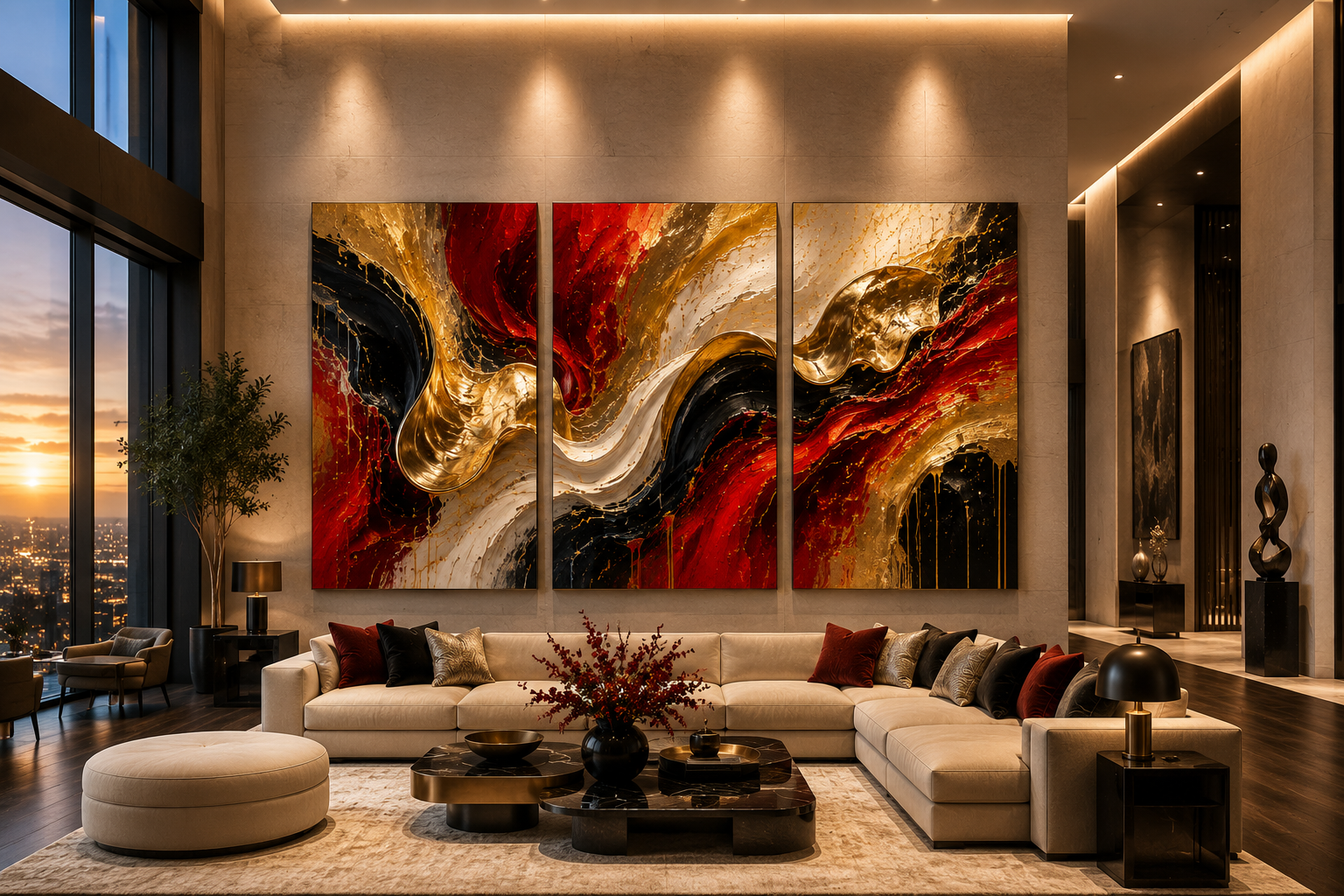
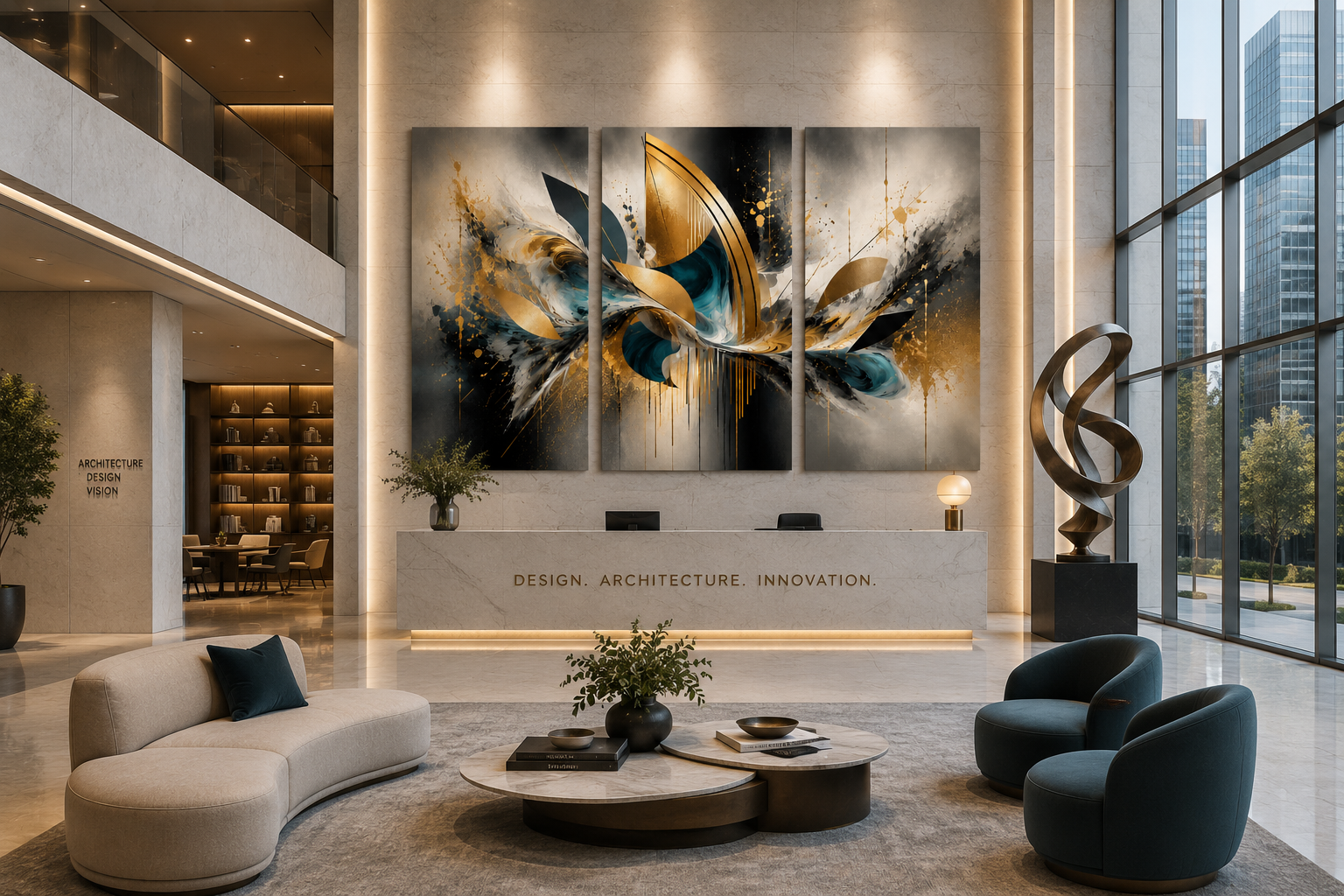
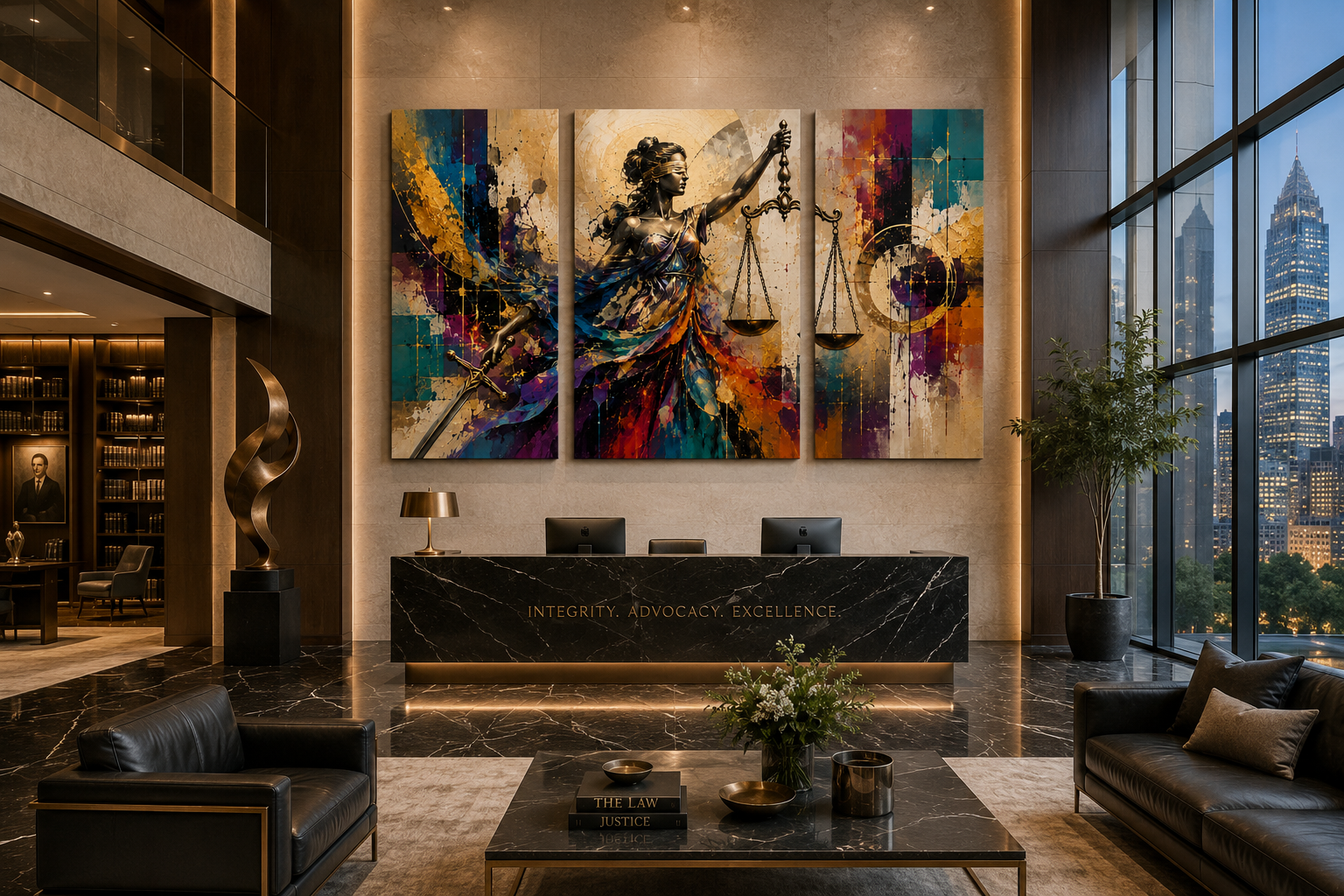
A triptych is one artwork presented across three separate panels. The panels are designed to work together as a single composition. Sometimes an image flows continuously across all three canvases; in other works, each panel is distinct but connected through color, movement, texture, or subject.
Triptychs have a very long history. They were especially prominent in medieval and Renaissance religious art, where hinged three-panel works were used as altarpieces. Contemporary artists have transformed that tradition into something especially suited to modern architecture and large interiors.
Why triptychs are so popular today
One of their greatest strengths is scale and presence. A large three-panel work can command an entire wall without feeling like one enormous, heavy rectangle. The small spaces between the panels become part of the composition, giving the artwork breathing room.
They also create movement. The viewer's eye naturally travels from the first panel through the center and into the third. That makes triptychs particularly effective for abstract art because color, brushwork, lines, and shapes can travel across the three canvases almost like a visual story.
Another advantage is architectural. Triptychs work beautifully above sofas, beds, conference tables, reception desks, and in hotel lobbies or executive offices. A format such as 39 × 72 inches overall has enough horizontal width to become an important part of the room rather than simply decorating it.
There is also something psychologically satisfying about three panels. The center establishes a focal point while the two outside panels create balance. The composition can feel symmetrical and peaceful—or an artist can deliberately disrupt that balance to create energy.
Why it works especially well with abstract art
Abstract painting doesn't have to remain within the boundaries of a single canvas. Across three panels, an artist can introduce an idea in the first panel, intensify it in the center, and resolve or transform it in the final panel.
That's why a successful abstract triptych can feel almost cinematic. You don't simply look at one image—you visually travel through it.
For collectors, there is another attraction: impact. When someone enters a room containing a dramatic large-scale triptych, the artwork can immediately become the focal point. That makes the format particularly appealing for luxury residences, hotels, corporate environments, galleries, and other large architectural spaces.
"I'll never have enough time to paint all the pictures I'd like to."
"The view of life I communicate in my pictures excludes the sordid and the ugly. I paint life as I would like it to be."